
An Owner’s Role
Who is Agland Engineering?
Agland is a company immersed with real life experience, and dedicated to the practical conservation of agronomist husbandry, closely held ownership and land productivity; both economic and ecologic, as they are inexorably tied.
We work for and with both proactive producing landowners close to the land, and landowners with their land’s heritage at risk.
We bring generational, on-the-ground private sector experience in business, land, livestock, forestry, farming and families, and the knowledge that no outside consultant can know as much about a place as an observant owner, manager or long term tenant.
Our mission is accomplished when our landowners become economically resilient and inspired to effectively pass on their legacy and culture of deep agricultural husbandry, stewardship and productivity.
What’s needed to accomplish this?
These complimentary and inseparable things:
1. Commitment: Owners need to pull together in the same direction during any particular generation, that requires cooperation, and cooperation requires clarity and integrity.
2. Capacity: Every acre and every person must be producing optimally.
3. Connectivity: Our communities must have confidence in us; that we are professional stewards, and that we can offer them the best chance to approximate sustainability.
4. Continuity: We must have access to and honor the past, and we must leave a legacy for the future.
How do we do all that?
We plan.
What does a good plan do?
The sole purpose of any good business plan is to create long term owner value (AKA Long Term Value). In order to create that value, the plan must provide continuity and create cooperation, it must prepare for and create opportunities and stimulate productivity. It should document, communicate, direct and inspire.
An effective plan is not possible unless owners are clear about what they want. That takes practice. Let’s get started!
What will it cost?
It will cost time. It will return quality; quality of life, family, community and land.
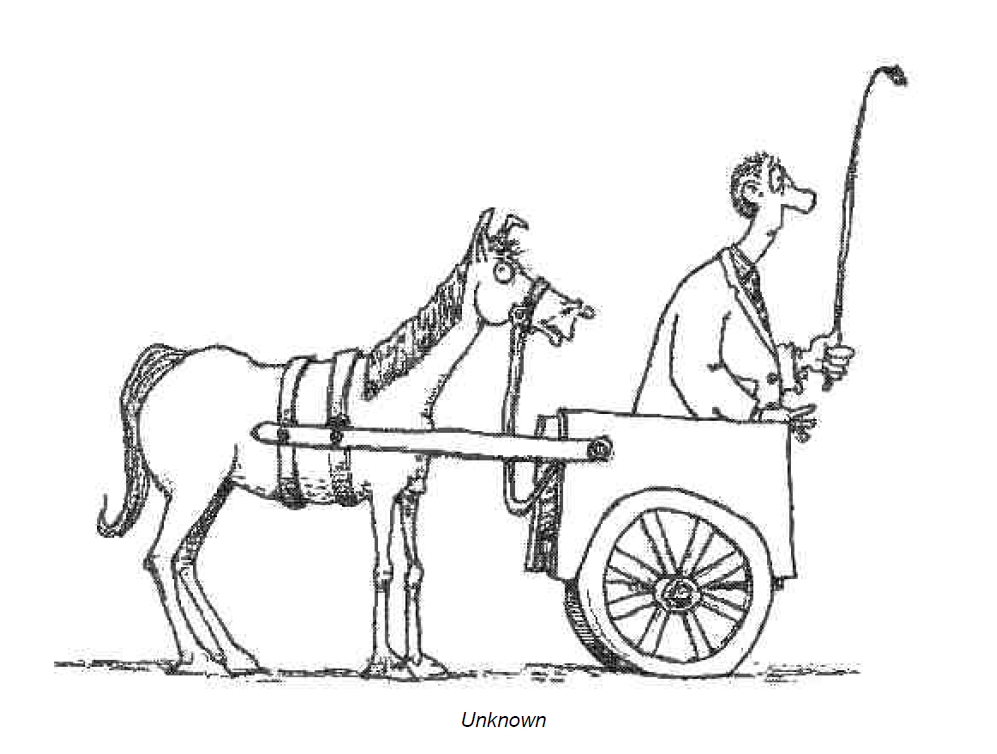
Keeping the Horse Before the Cart
Appropriate order of resource-land business planning steps:
Owners’ value: Be clear about what you want out of being an owner (owners only). If there are multiple owners, where’s the common ground?
Succession: Once the common ground is identified (owners’ agreement and commitment to a purpose), define expectations regarding the how, why and when of future control, ownership, and management (owners only exercise).
Vision(owners only exercise): What does accomplishing owner’s value look like in the world, in the community, on the land, and on the books?
Inventory: Document physical conditions as they exist, identify what needs to be done and establish a baseline to measure change.
Strategy: Design business land strategies to achieve owner values (owners, advisors and/or managers exercise). Establish goals to measure progress.
Policy: Design procedures of enterprise operations, conservation, restoration, rehabilitation and maintenance (everybody that’s involved with carrying out tasks on the land).
Practical Considerations
The reward for a person’s toil is not what he or she gets for it, but rather what he or she becomes by it.
In a family or other closely held business, it’s not possible to live well, understand stewardship or practice husbandry without first identifying and reaching agreement on owners’ values and expectations. Owners’ value is defined as the mutually agreed purpose(s) of a business. These purposes are the result of the thoughtful introspection of each owner about why they want to invest or be engaged in a business. It is the expectation of what one wants to get in return for investments of time, energy and capital. Successful multiple owner businesses are only possible when owners find one or more common values to shape and direct the business. If consensus of owners’ value can’t be reached, it’s time for the outliers to cut their losses and get out!
Accomplishing agreement or identifying that it does not exist is highly probable with minimal facilitation, provided the owners know what they want, are participatory and have a history of being clear and dignified with one another.
If the business has multiple owners who have a history of cooperation and communication, it is recommended that they enter into a formal engagement with each other to commit to complete the workbook too Ag-Planner/IV™ (see www.familybusinessmgt.com), or some similarly functional vehicle. This method is inexpensive, but absolutely requires a disciplined time commitment and a front-end agreement and commitment to process. It also requires the designation of a facilitator either from within the group of owners or a hired third party professional (e.g. the accountant). If the ownership is complex, it’s best to hire a proven consultant to facilitate the workbook. For example, see https://familybusinessmgt.com/#about, or ask Agland about potential local facilitators.
Owners can effectively go straight to the land plan if owner value is clearly defined and agreed-to, and succession of control, ownership and management are already described with procedure. If no succession plan exists, the owners can be developing the succession plan during the compilation of the land plan assessment, using Planmaker ™ or some other vehicle.
Moderately difficult farm and ranch family relationships are unfortunately normal. Clear expectations and transparent succession decision procedures are the solution to happy working families. Unfortunately, those are often missing in hard-working Ag. family businesses. And, as ownerships become more complex over time, and the complexities and demands of ownership increase, resource land based business tend to magnify those kind of issues. Moderate dysfunction between owners is a challenge, and may require specialized facilitation.
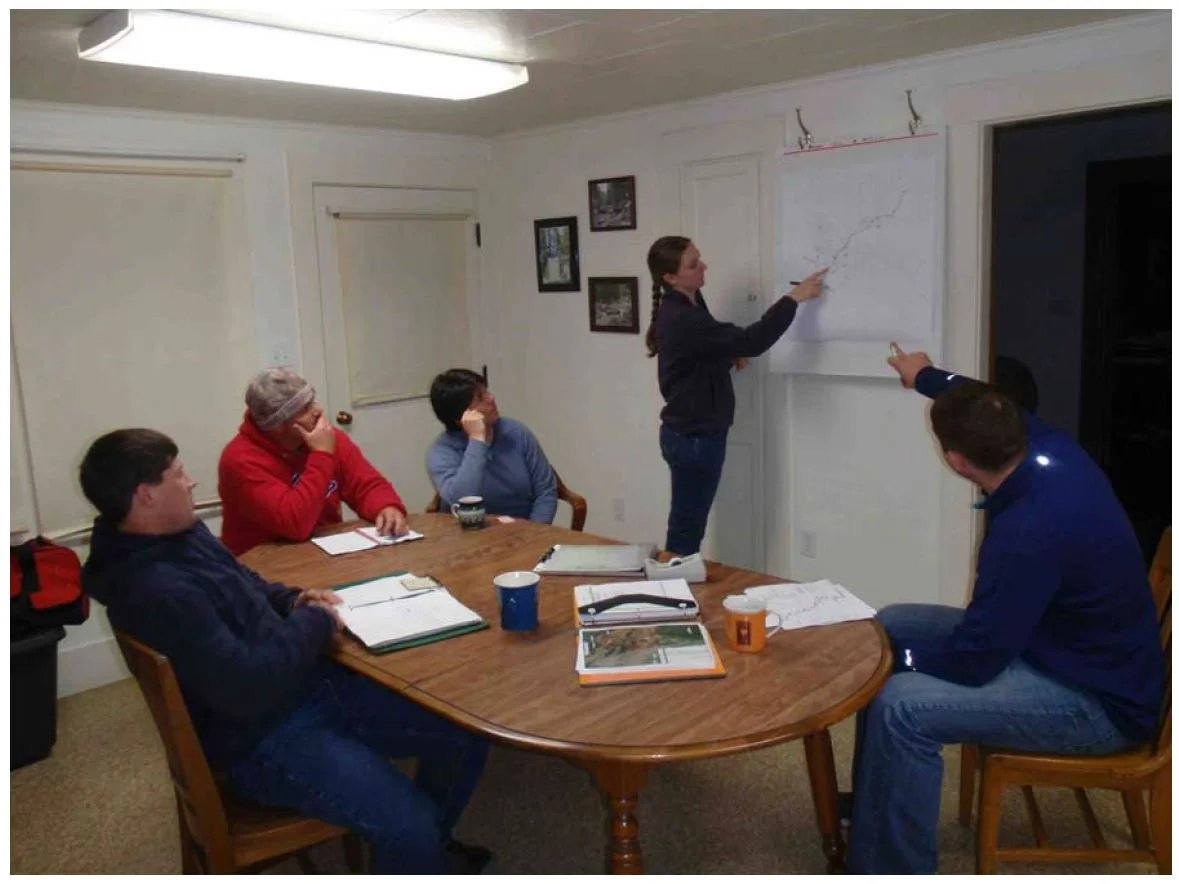
Resource land business planning is a participatory exercise. The crafting of the vision statement should involve all owners. The succession plan should involve all owners and advisors as well. The physical land plan is most effectively developed with the participation of one or two owner representatives working in the field with the plan consultant, with defined owner values and vision as a guide. Ranch planning constitutes a significant time commitment for the owner representatives (estimated 250 hours over a period of up to two years).
First Step: A Landowner’s Legacy
Leave a legacy of dreams and aspirations for your land. If it’s been done for you, you have an obligation to at least do as well; if not, it’s time you do.
Thinking through and declaring owners’ desires are the fundamental initial steps in any kind of land planning. Identifying the desired future derivatives of a business is essential to all other components of planning from capital expenditures to conservation. The vision encompasses the directives that goals will serve and achieve, so the vision comes first. It guides the objectives, policies and approaches, for every future effort and expenditure on that land. The owners’ landscape vision declaration is essential to stewardship and effective management; without which enduring culture, nature, economics, succession, and long term efficiency & effectiveness, are impossible. Immersed in day to day operations, we have trouble visualizing what we want next year or in 5 years beyond favorable weather and markets, let alone what our desires are for our land out 50 or 100 years.
An effective land vision sees long-term, a minimum of 50 years (two generations) for a ranch or farm and longer for a forest property. It has four fundamental usages:
as a reminder by which every effort should be measured.
as a declaration of what the company has thoughtfully agreed to and will cheerfully work toward achieving (it is an essential communicated agreement between owners and from owners to managers).
as a generational policy, empowering successors to commit and predecessors to delegate.
as the foundation of deep generational husbandry; or the skills and knowledge of a very specific place that can only be accumulated in more than one lifetime.
The vision declaration should be oriented across generations, and should be brief and memorable to the point that everyone involved with making decisions should know it. The vision is the work of owners. Document it, work it, and pass it on.
See Owner Value Worksheets on the Worksheets and Forms page
Landscape Vision Worksheet
This is fundamentally important to all other components of any land conservation plan. A landowner’s group vision of what the property will look like and the services it will provide to the owners and perform for the community in the time period from the next generation to 100 years or more. The landscape vision will mold land-based business mission(s), and all recommended strategic goals and policies will serve that vision.
The following are vision helper questions:
What will the property look like in 50, 100 years?
What will the forests look like?
Oak woodlands and grasslands?
Roads and fences?
Streams and riparian woods?
What else?
2. What services will the land (owners’ value) perform?
Influence?
Jobs?
Wildlife?
Owner income?
Community services?
Recreation?
What else?
Succession
Without decision, neither knowledge nor integrity are possible. Integrity and continuity demand a clear path.
Succession planning is a fundamental necessity in any kind of business plan, but especially so when so much capital, heritage and emotion are potentially at stake as with a land based business. Succession plans govern the decisions about the why, how and when of business successors including (in order of both difficulty, and significance of consequences of not getting it done) the controlling owner, other owner(s), manager(s), workers, professional advisors, service providers, and vendors. A comprehensive succession plan should also include estate plans for each of the owners’ successors.
By comparison, an estate plan prepares to manage the costs associated with an individual ‘s personal inheritance; this is what most professional planners consider to be a succession plan, but by itself it’s not.
The succession plan identifies owner commitment to a direction, and defines clear expectations. This is the hardest work an owner can engage in. Some businesses do this naturally. Most don’t. The vast majority of complex ownerships have people who are not pulling together¹. Often they look like they are pulling together, but are actually pulling in opposite directions. It serves no purpose for a business to engage in specific resource planning if the owners fundamentally disagree (either subconsciously or covertly) about the long term direction of the business.
One can’t always tell by outward appearances whether a family business has a good succession plan.
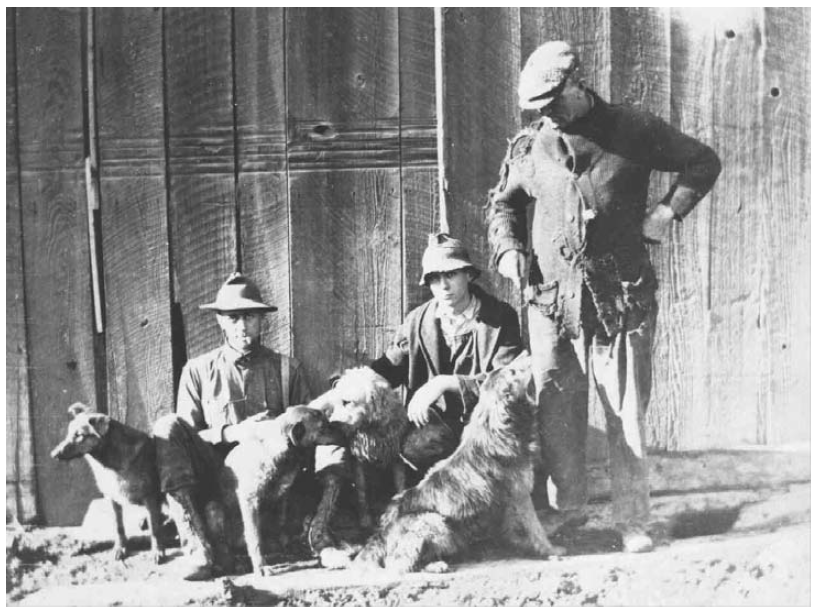
¹ The metaphor (rowers in a boat) has polar aspects; i.e. the joy, efficiency and competitive advantage of pulling in unison, and the more consequently disastrous effect of separate rowers attempting to reach different destinations.
Governing Mission
There are no great works without deliberate intention.
A mission is a governing statement that will be a guide to describe and direct all action. It is used to mold strategies and decisions as to their appropriateness to achieve the landscape vision. A mission should be simple, direct, and clearly measurable. A mission is the single most important strategic objective. It can be broken into resource components or be an overall objective for one place. Mission should also be developed for each management team.
Strategic Goals
Strategic goals are steps or desired benchmark conditions that will help transition a landscape or a business toward the stated vision. They are all-encompassing strategies used to govern owner, management and worker decisions about operational policies and standard procedures in order to achieve the vision and accomplish owner's value.
Example forest vision component: The forest contains many large old trees and a wealth of large but productively growing timber. It is rich in it’s standing value and productivity. It provides our family with significant periodic income, and provides places for our family, staff and friends to hunt, camp, work and enjoy the land together.
Example strategies and strategic goals:
Minimize enterprise conflict e.g. keep haul roads off of grazing lands or install cattle guards where forest roads enter and exit grazing lands.
Create diverse revenue stream potential e.g. design into the CP no-harvest campground enterprise envelopes and stream corridors.
Create market timing opportunities e.g. craft and implement SOPs to ensure roads can handle biomass transport in addition to logs or find methods to capitalize and prepare regulatory well in advance.
Maintain the economic scale e.g. prevention of subdivision of the property or add to the acreage.
Manage commercial forestlands for optimum long-term economic productivity e.g. prevent unsustainable capital demands on the resource (the ability of the IRS or exiting owners to deplete the forest stand), or establish the goal of culmination of mean annual increment, or capitalize forest rest, rehabilitation, and restoration by utilizing public restoration or conservation easement funding.
What are the strategies pertaining to oak woodlands and grasslands, roads, streams, and riparian woods? What else?
Strategic Goals
The most important indicator of a good plan is that it is used.
It’s often taken for granted that strategic planning is too academic for a farm or ranch. Since most strategic planning approaches have no operational context, this is usually true. It’s hard to comprehend how to proceed when faced with overwhelming operational and financial challenges. The only way to deal with a hard operational problem is to boil it down to it’s fundamentals. Pick one prioritized problem and focus on it’s most basic fundamentals. Remove yourself, get out of the box, and think big; e.g. what does the problem look like from a 30,000 foot flyover?
The fundamentals: Vision/Owner Value – Mission – Strategy and Goals – Policies and Procedures.
A detailed plan checklist is attached for your personal consideration. The checklist is perhaps overdetailed in most applications, and should be specifically tailored to a business. Please be advised that this entire document and its attachments are proprietary, intended for your consideration only, and not intended for dissemination to anyone other than your co-owners.
Planning Checklist
Owner’s Value and Definitions: What do you want from your investment (time, energy, money) in this business? i.e. why do you do this?
Vision: What will the enterprise look like in 10 years? 50 years?
Straw Plan: Sketch it, kick it around, throw it in the air and see where it lands.
Strategic Plan Checklist: How do you get there? What will guide you?
Succession Checklist: Who will control the company? Own? Manage? How will those decisions be made?
Inventory Checklist: What condition is the land in? The vegetation? The infrastructure?
Procedures & Policy Checklist: How do you delegate? How do you communicate in the company?
New Economy Measures: What is coming that poses a risk? Opportunity? To what?
Idea Proposal Policies: How do you optimize contributions from talent? How do you capitalize new ideas?
Agriculture Business Specific Tools: How do you delegate? How do you get people to do what you want?
Agland’s Land Business Planning Discussion Outline
Step 1. Owner’s Value (see above)
Step 2. Land Vision (see above)
Step 3. Business Vision (see above)
Step 4. Straw Plan: Business Projection at 5 and 10 years:
revenue needs
marketing and sales
capital and stock flow
human talent - management and labor
risk
Step 5. Strategic Plan (in chronological order):
Business Structure
Ownership and business structure
Control
Marketing Plan
Customer profiles
Research
Feedback loops
Pricing
Advertising
Manufacturing
Distribution and merchandising
Capital Plan
Operational capital
Investment capitalization
Owner compensation model
Strategic Level Human Talent Organization: advisors, management and labor position needs
Experience
Personality types
Metrics
Incentives and salary
Compensation strategy
Land Business Financial Goals and Metrics
Gross margin(s)
Profit
Risk Management:
Labor
Markets
Food safety
Regulatory
Catastrophic flood and drought
Epidemiological
More Risk Management: Succession
Estate plans (owners)
Management why; successor qualifications
Management how; recruiting and training
Management when; timing triggers
Step 6. Conservation Plan (CP):
Prerequisites
Natural resource assessment: baseline (quantify) and analysis (qualify)
Agricultural infrastructure assessment baseline
Owner’s value defined
CP Steps
Owners landscape vision (define success in the mind’s eye)
Strategy and strategic goals
Agricultural infrastructure assessment analysis
Develop projects
Draft conservation policies and standard procedures
Step 7. Land Business Operational
Human talent performance and evaluation
Financial and inventory policy (Operational Handbook chapter)
Bookkeeping and reporting system
GIS system (this need not be computer based)
Purchasing procedures
Capital investments in infrastructure
Capital investments in equipment and tools
Outreach procedures
Land and production practice; operational policies and SOP document (Operational Handbook chapter)
Road and other infrastructure maintenance procedure, reporting and prioritizing
Grazing or cropping practices
Harvesting
Reforestation
Guest procedures
Conservation, rehabilitation, and restoration projects; these should all be planned together. The plan must be map based and incorporate the strategic plan, and be reviewable by the controller, managers, and advisors.
Assessment metrics and charting
Copyright 2021 Agland Engineering Inc. All Rights Reserved.